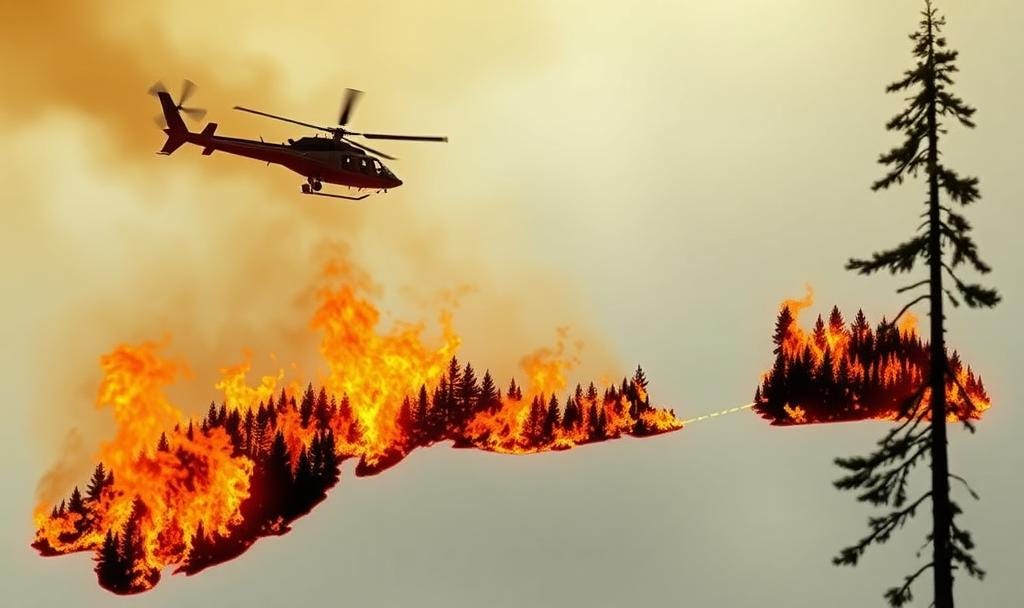
Does Glyphosate Spraying Create Tinder?
What the Canadian Evidence — and Bear River’s Reality — Say About Fire Risk

A Herbicide with Fiery Consequences
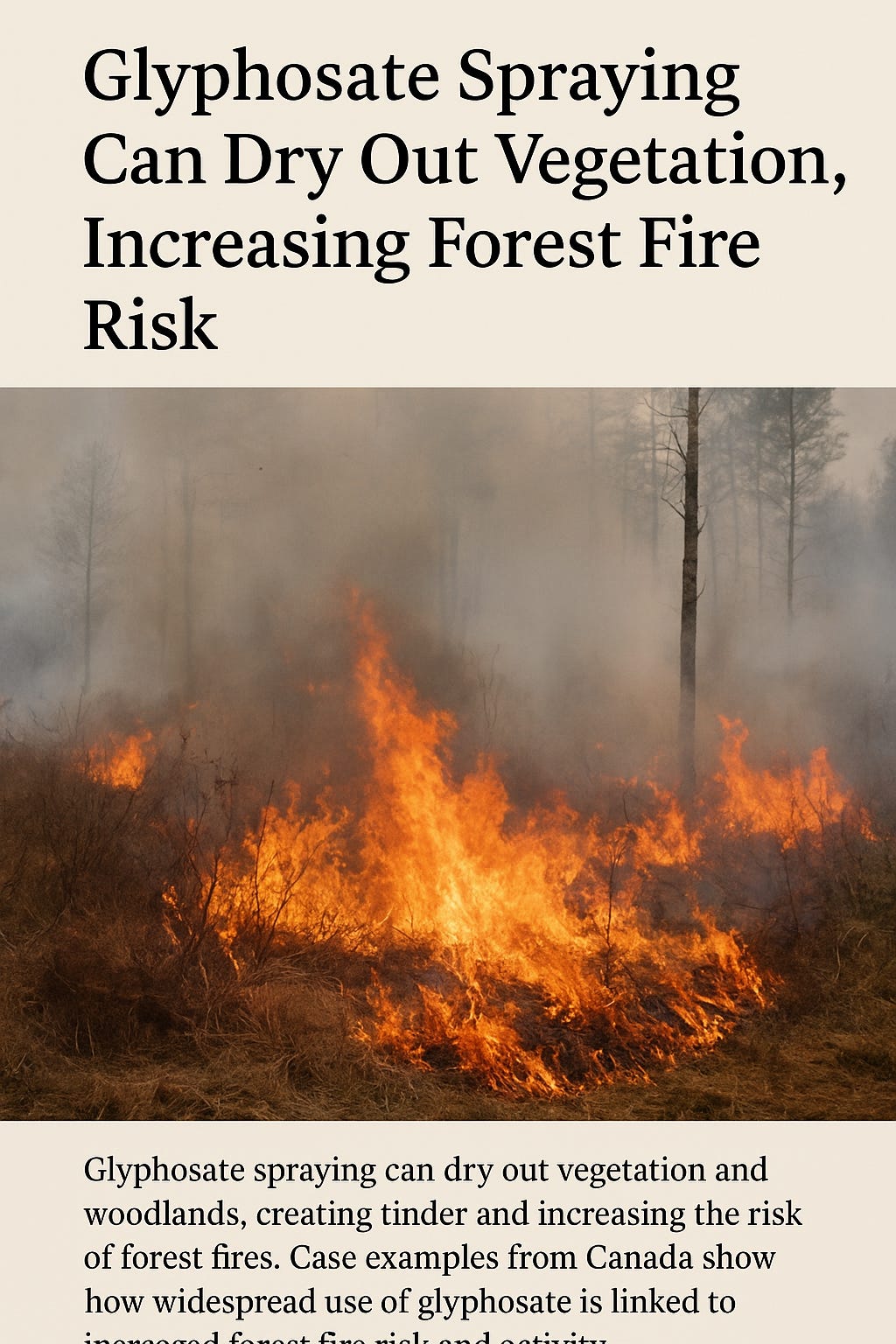
Glyphosate is Canada’s most widely used herbicide. In forestry, it’s sprayed over clearcut sites to suppress broadleaf species such as aspen, birch, and maple — trees considered “competition” for replanted conifers.
Forestry companies argue this ensures even-aged, fast-growing conifer crops. But ecologists, hunters, woodlot owners, and increasingly, firefighters, warn that the practice may be backfiring in the age of megafires.
Here’s why:
Short-term: Glyphosate kills plants slowly, leaving behind dead, dry vegetation. These fine fuels cure in the sun, becoming tinder that ignites easily.
Medium-term: Dead saplings and shrubs become ladder fuels, carrying flames into the canopy.
Long-term: Repeated spraying suppresses deciduous species that can act as natural fire breaks, replacing them with uniform conifer stands that are hotter and faster to burn.
In a country where fuel type is one of the main drivers of fire behaviour, that shift matters.
Canadian Case Examples
Nova Scotia (2024–2025)
In August 2024, the province approved glyphosate spraying on 1,837 hectares (4,539 acres) across six counties, including Annapolis and Kings.
In 2025, amid severe drought and water shortages for firefighting, new approvals drew sharp criticism. Forestry activists and community members warned that spraying would leave behind freshly killed, tinder-dry fuels during the highest danger period.
Takeaway:
Spraying during drought is a recipe for heightened ignition risk and rapid spread.
British Columbia
More than one million hectares have been sprayed with glyphosate over decades, largely to kill aspen.
Yet aspen is one of Canada’s most fire-resilient species — higher in moisture and lower in volatile oils than conifers. In wildfires like 2018’s Shovel Lake Fire, aspen patches often remained green where surrounding conifers were incinerated.
Critics argue that suppressing aspen in favour of conifers strips landscapes of natural “speed bumps” against wildfire.
Takeaway:
Forestry spraying in B.C. has reduced one of nature’s best allies in slowing fire.
New Brunswick
Sprays 15,000 hectares annually on Crown land, again to suppress broadleaf competition.
Opponents say this fuels both biodiversity loss and increased wildfire hazard by creating conifer-dominant, fuel-rich landscapes.
Takeaway:
A uniform conifer forest is not a fire-resilient forest.
What the Science Says
Fuel matters. Canada’s Fire Behaviour Prediction System shows fire intensity and spread are dictated by fuel type, structure, and moisture.
Aspen and other deciduous trees can reduce fire activity. Reviews confirm they often act as natural dampers, though effectiveness varies with drought and stand conditions.
Herbicide shifts fuel composition. Killing deciduous species reduces fire-dampening stands while creating dead fuels in the short term.
In other words:
Glyphosate can make forests more flammable both immediately and over time.
Counterpoints
Regulators like Health Canada’s PMRA approve glyphosate for forestry use based on toxicology and environmental criteria — not fire behaviour.
Provinces note that glyphosate spraying has declined in recent years (e.g., B.C. reports an 88% drop since 2018). But legacy effects — millions of hectares already shifted to conifer dominance — remain on the landscape.
Sidebar: Bear River & Surrounding Communities
Where Spraying Happened Recently
2024 approvals covered Annapolis, Kings, Queens, Colchester, Cumberland, and Hants
Proximity matters: spray blocks in neighbouring areas can affect regional fire spread.
Your Local Fuels
Bear River sits in the Acadian mixedwood forest: balsam fir, red spruce, sugar maple, yellow birch, with some aspen pockets.
Fir and spruce are volatile and form ladder fuels.
Maple and aspen stay moister and can slow spread.
Local FireSmart Recommendations
0–1.5 m from your home: keep non-combustible surfaces, clear needles from decks and gutters.
1.5–10 m: prune conifers up 2 m, thin spruce/fir thickets, favor maple and birch near the house.
10–30 m: maintain deciduous strips, space conifer crowns, dispose of slash quickly.
Access: keep your driveway 4 m wide/high for trucks, post your civic number clearly, and make water sources visible.
If You’re Near a Sprayed Block
Expect brush to cure (dry out) in weeks — treat it as tinder.
Delay welding or mowing until early morning when humidity is higher.
If you own land, consider mechanical brushing instead of spraying, especially near homes and roads. Or employ animals such as Goats, Sheep, and Pigs to help clear underbrush and overgrown areas of tinder and vegetation.
The Bottom Line
Glyphosate doesn’t just kill brush. It changes the way forests burn.🔥
By creating dead, dry fuels in the short term and reducing deciduous fire breaks over time, herbicide use is tied to increased wildfire risk in Canada’s forests.
For places like Bear River — where Acadian mixedwoods still provide a buffer — the lesson is clear: protect your deciduous species, stay vigilant about fuels, and push back on forestry practices that trade biodiversity for higher fire hazard.
Because in a hotter, drier Nova Scotia, fuel management is fire management.
Which really makes me question the wisdom of our Premier, Tim Huston, and the Nova Scotia Government! Imposing a $25,000.00 fine for entering the woods, for fear of Forest Fire Risk, and then approving the Spraying of Glyphosate just a week later, under the same risk and Ban!? Makes one wonder! Why?
What are Your Thoughts?